“Radstorm” Protocol Weapon
There is a tendency for weapon systems in the Protocol One category to skew towards concepts that may be rather charitably called “inventive.” The Radstorm device embodies this tendency flawlessly; it is overly-complex, limited in application, costly and difficult to manufacture at scale, and undisputedly brilliant at what it does. GuardCorps veterans refer to Radstorms as “Polite Atomics” due to their nature, and have a wary respect for them. After all, it must be said that the technical difficulties in logistics appending to a particular weapon system are of little comfort to individuals who find themselves facing up to its effectiveness in the field.
.webp)
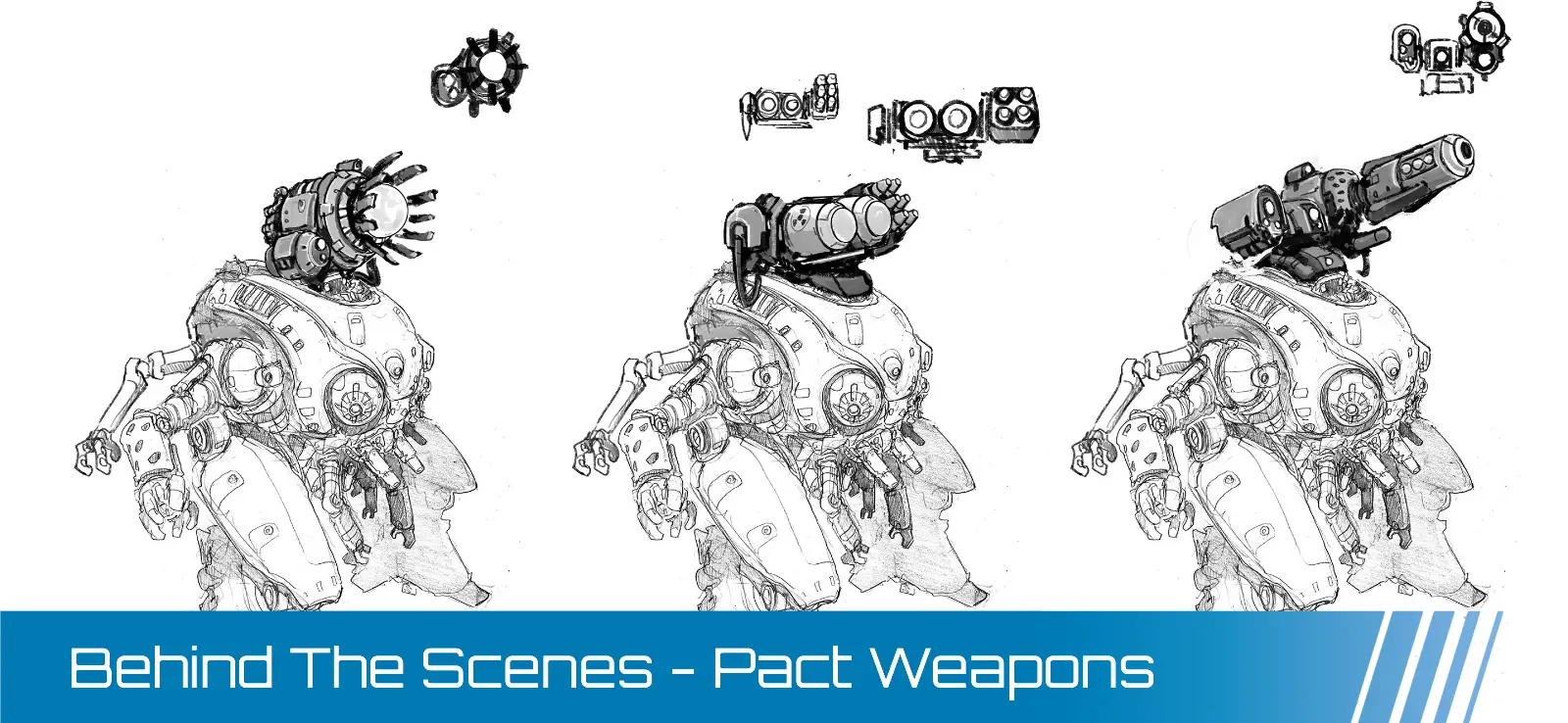
A Radstorm device is readily identifiable by sight alone, which is a feature that some would argue is deliberate. It comprises a spherical containment capsule carried in a launch cradle aboard the operating zeoform. The capsule contains a fissile core being held, and modulated, to a point at the very edge of criticality by a surrounding electro-manipulator field. Little thought seems to have been applied to capsule launch. It is achieved without additional guidance at the command of the zeoform carrying the device as if it were any other weapon system. The launcher then typically uses an electromagnetic impulse to boost the containment capsule on a ballistic trajectory, although chemical, pneumatic, and other mechanical methods have been reported, implying that only the containment device itself is subject to any single manufacture methodology.
The containment capsule is a wonder, and something of a mystery, as most are recovered in a severely damaged state. Again, this is likely by design, although the broad techniques being used are readily apparent through their effects. Shortly after landing, the device will emit a low-intensity burst of ionizing radiation, typically modulated to predominantly produce harmless Alpha particles, although there is evidence that this can be adjusted either prior to launch or remotely by the operating zeoform. For example, a piracy incident on Jekel-Has reported a zeoform using a Radstorm capsule as a crude communication device to dissuade approaching reinforcements, cycling up to Gamma radiation on close approach as a warning, but returning to emitting Alpha particles when units withdrew.


In normal operations the initial ''warning pulse” is enough to register and cause discomfort but does little harm, especially to armored targets. However, after a short delay, the immediate area is bathed in high-intensity radiation, typically Gamma radiation but sometimes Neutron depending on the environment. This pulse is strong enough to damage zeoform systems and seriously harm biological life. Armor offers considerable protection, but can become heavily irradiated after high exposure time and thereby a considerable concern in its own right. After the “damage pulse,” the device cycles down again, and emits another warning pulse. The warning/damage cycle will continue until the operating zeoform halts it, or the capsule is destroyed. The latter risks triggering an uncontrolled reaction with worse consequences than leaving the device intact. On completing its task, the device will safely power down and reduce its internal components to disappointing slag.
Keen observers will note that this makes the Radstorm an effectively one-shot weapon, and in many cases this is borne out in combat engagements. No effort is made to retrieve or reuse Radstorm devices, despite their obvious cost. There are, however, accredited reports of Pact zeoforms rearming Radstorm devices during combat conditions. Most notably, the Amaroq type Master-Rig appears to have an internal bay capable of constructing Radstorm devices, presumably using a technique akin to the GuardCorps’ Nanoforge ammunition system and a stockpile of requisite components. The persistent idea that Pact armorers simply adapt Radstorm devices out of spent fuel rods and discarded reactor housings is so ridiculous that I refuse to engage with that particular debate any further: Patently, No. They. Don't.
One of the most respected analysts, known both for highly detailed breakdowns and post-engagement evaluation as well as more informal “pop” texts is “Drew Chambert” (a nom de plume). Little is known about this writer except it is evident they are or have been a zeo designer, possibly even a pilot at some point, and have some quite deep connections into both Pact and GuardCorps operations. Their writings and audiocasts are available across all one hundred heliospheres to a greater or lesser extent.



























.webp)
.webp)