Blaze Tech
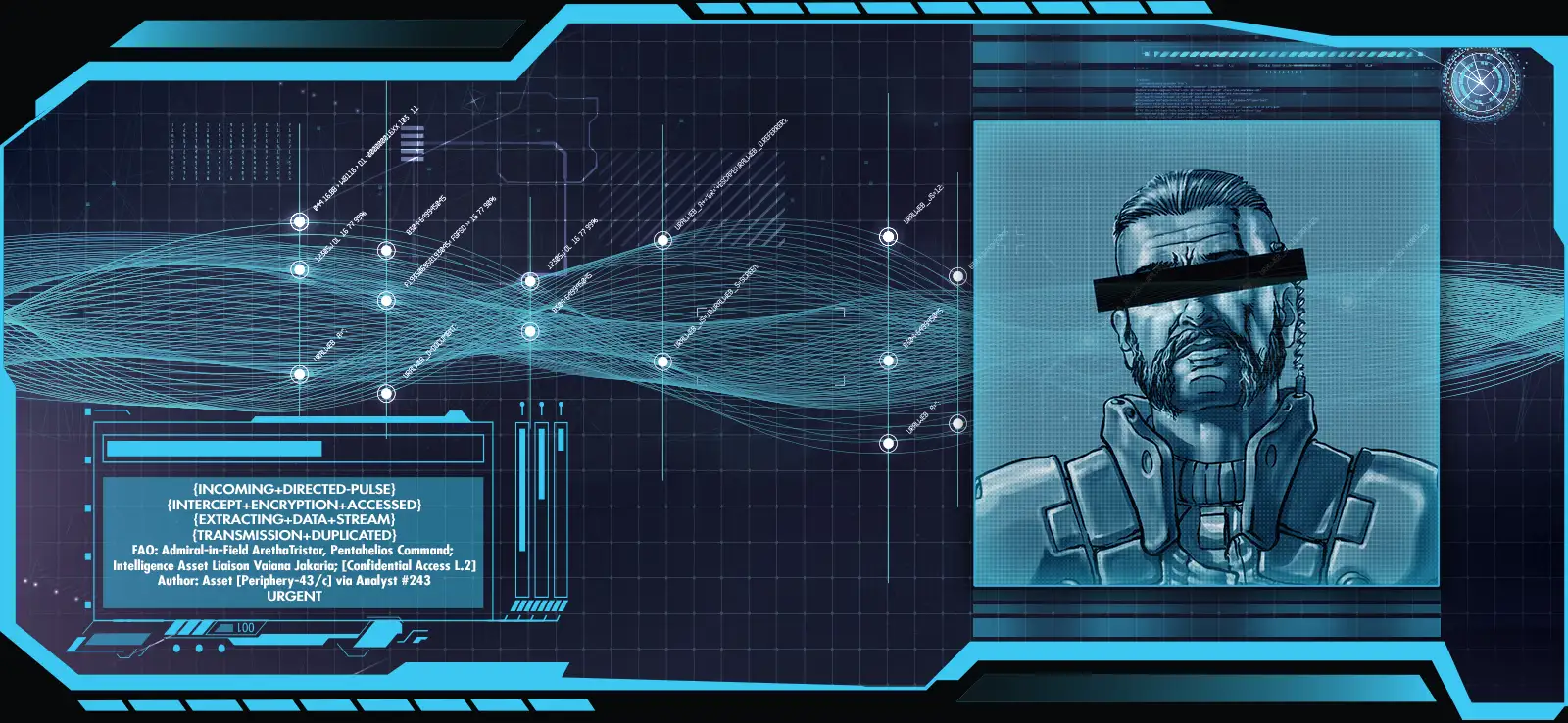
Analyst’s Note: The reopening of the slip point has allowed me to pick up these logged transmissions from inside Periphery.
Several Invader weapons were left behind after their withdrawal from boarding the Gallant, and our tech specialists have been examining them. They are a mix of weapons that we have identified as being carried by the support troops (currently called Hostile Type One) and the larger alien soldiers (Hostile Type 2).
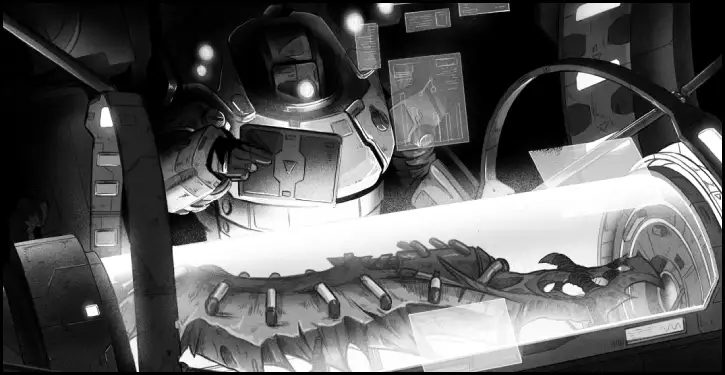
From firsthand experience, these weapons utilize a different technological niche to those made in the Humanverse. The support weapons are projectile-firing rifles not too different from a RIP gun, with similar kinetic power and armor penetration. Rather than a standard ammunition magazine, they seem to use some kind of injected polymer that becomes a crystalline projectile.
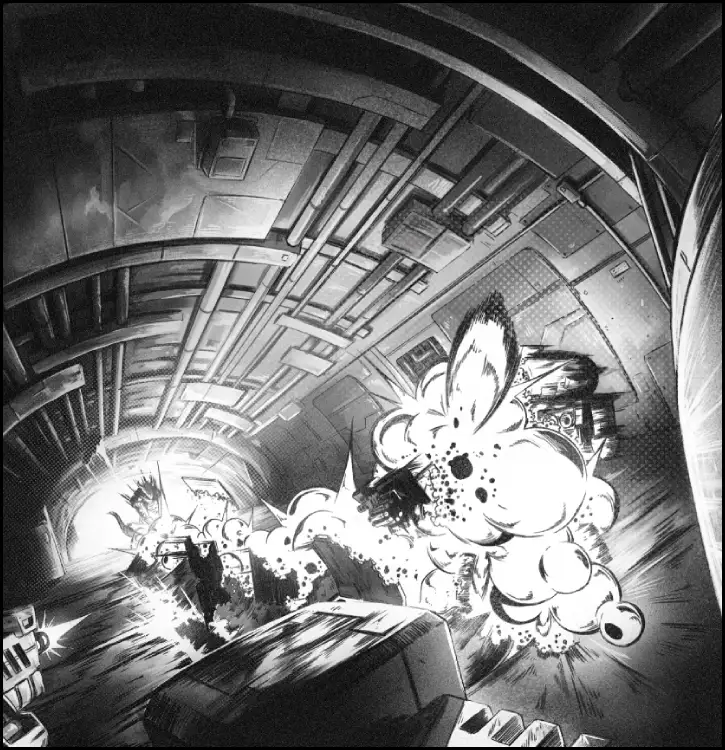
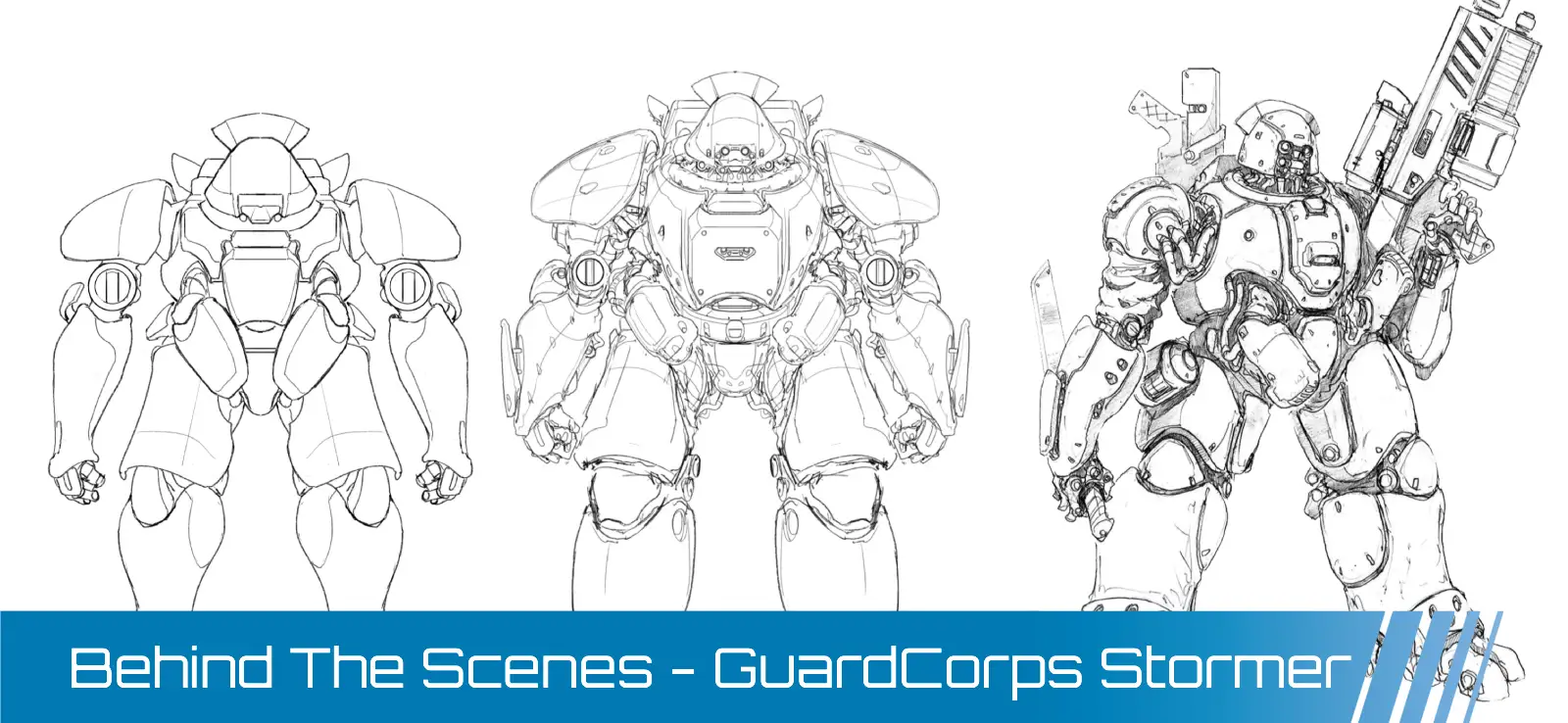
The larger, blade-like weapons are even stranger. They look like large melee weapons, and I saw one of the HT2s cut a crew member in half with a single blow. A close-combat attack also easily penetrated Lieutenant Modul’s Soldat. However, the energy flow can be redirected or channeled into a ranged blast, which sort of ate into the armor of my Stormer and chewed through half the protective striations in a single hit. It has all the effects of some types of disintegrator weapon, but in a way I have never seen before. The techs were also unable to exactly discern the mechanism by which this energy works, but they have given it the name ‘“Blaze” because of the flame-like appearance it takes.
I have attached the recorded opinion of TechOps Soloman Powalski.
There are crystals all along the center of the blade. More precisely, the blade is made of geometrically arranged crystal structures, with a containment material molded around them to turn it into a weapon. Worth noting is the odd grip shape, which is ergonomic for the weird double-thumb hands of HT1 and HT2.
There seems to be no obvious power source. The Blaze weapons are wholly inert. There are what looks like receiver ads in the handle, which presumably connect to some kind of power source carried by the wielder? Or—zengineer Willsonia Haveland suggested—from the HT2 itself. This is unlike the support rifles, which have a clear crystal stack capacitor energy cell that can be recharged. Presumably the crystals can be adjusted in position to modify the wavelength of the energy flow through the weapon, which would create the separate cutting edge and blast effects that were witnessed.
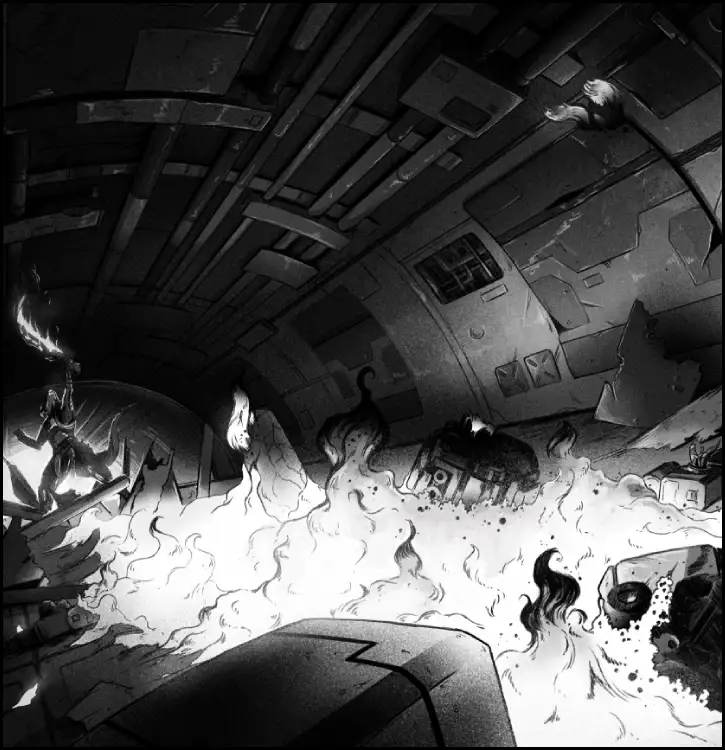
Unable to activate the weapons in the lab, we have been forced to study the footage from the battle for even an inkling of how these things work. Fortunately, Sergeant Vronski’s Stormer is equipped with a high-resolution full-spectrum camera, and we have been able to enhance the recordings to study the energetic properties of the Invader’s attacks. We have also examined the damage inflicted on his zeo.
The closest we can get to describing the behavior is as some kind of hyper-mobile radiation— Haveland called it entropic—that breaks down molecular bonds, causing tremendous atomic fragmentation damage. We don’t have the means to test this hypothesis, but in order for that to work, the matter struck must be dispersed in a cloud of antiparticles as radiation decay.
As Haveland said, “And I don’t have a funtin clue how that would happen.’”
.webp)









.webp)
.webp)